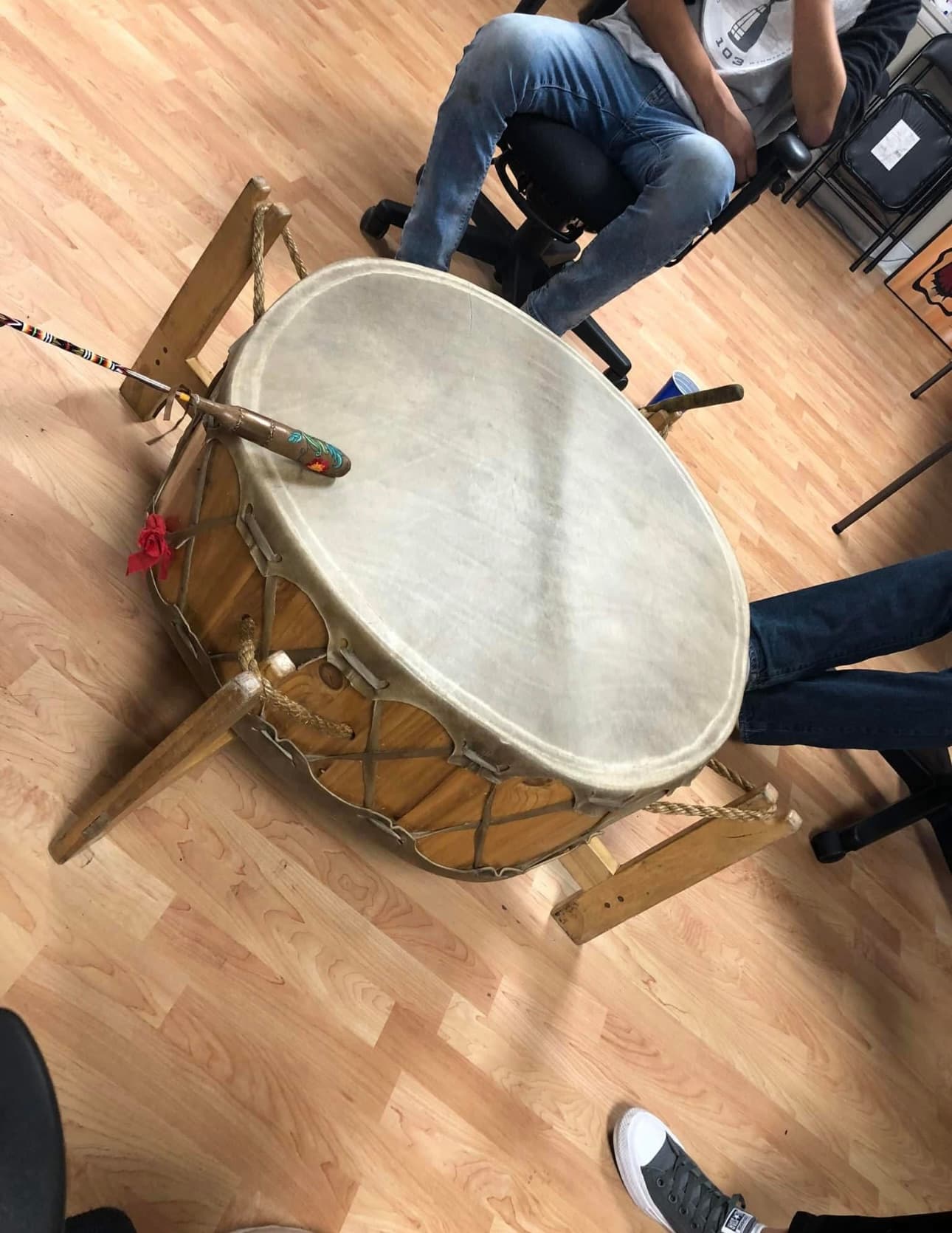
Elder guidance is one of the most powerful forces shaping First Nations, Métis, or Inuit youth wellness in 2026. Research consistently shows that when young people have meaningful connections with Elders and Knowledge Keepers, they experience stronger mental health, greater cultural pride, and more stable housing outcomes. At New Steps ILP, intergenerational connection isn’t a program add-on — it’s woven into every phase of our work on Treaty 1 Territory.
For the more than 9,000 First Nations, Métis, or Inuit youth in Manitoba’s care system, the transition to independence is about more than finding an apartment or landing a first job. It’s about understanding who you are, where you come from, and where you’re going. Elder guidance helps young people answer those questions in a way that honours their cultural identity and builds lasting resilience.
Why Elder Guidance Matters in First Nations, Métis, or Inuit Youth Programs
Elder guidance strengthens First Nations, Métis, or Inuit youth programs because it grounds the transition to independence in cultural identity rather than institutional compliance. A 2025 scoping review found that Elder knowledge sharing was present in 63% of land-based First Nations, Métis, or Inuit youth programs, with positive impacts on self-esteem, mental health, cultural pride, and community connection (PMC, 2025).
When young people are moving through transitional housing, this connection offers something no case plan alone can provide: a living link to language, ceremony, and belonging. Elders carry knowledge that has sustained communities for generations — and sharing that knowledge with young people creates a bridge between cultural wisdom and modern independence.
The “Community Is Medicine” study (Thorburn & Ansloos, 2025) identified four culturally grounded program elements that improve mental health and suicide prevention outcomes for First Nations, Métis, or Inuit youth: cultural programming, intergenerational involvement, harm reduction education, and youth political advocacy. Elder guidance sits at the heart of at least two of these pillars.
The Evidence: How Intergenerational Programs Improve Youth Outcomes
Research-backed intergenerational youth programs consistently produce better outcomes across mental health, housing stability, education, and employment. Multiple peer-reviewed studies published in 2025 confirm that culturally grounded approaches — especially those involving Elders — outperform standard service delivery models for First Nations, Métis, or Inuit youth.
| Program Element | Documented Outcomes | Source |
|---|---|---|
| Elder knowledge sharing in land-based programs | Improved self-esteem, mental health, cultural pride, community connection | PMC scoping review, 2025 |
| Cultural programming + intergenerational involvement | Better mental health, suicide prevention outcomes | Thorburn & Ansloos, 2025 |
| Cultural wellness mentors (HOP-C North) | Improved housing stability, mental health, employment, education | HOP-C North evaluation |
| Elder-led curriculum (HIP Youth to Youth) | Cultural knowledge transfer, Treaty understanding, residential school education | HIP 2026 National Experience |
The Housing Outreach Program Collaborative in Northwestern Ontario (HOP-C North) offers a particularly compelling example. When the program adapted its model specifically for First Nations, Métis, or Inuit youth and added a cultural wellness mentor role, outcomes improved across every measured dimension — housing stability, mental health, employment, and education (HOP-C North evaluation).
What Elder Guidance Looks Like at New Steps
At New Steps ILP, Elder involvement is part of ongoing programming across all three phases of housing — not a one-time event or a checkbox on a funder report. Young people in our program access Elder guidance through multiple touchpoints designed to build genuine, lasting relationships.
Our Learning Centre integrates cultural programming alongside GED preparation, life skills, and financial literacy. A young person might work on their resume in the morning and participate in a sharing circle with an Elder in the afternoon — both experiences building toward the same goal of confident independence.
Key elements of our intergenerational programming include:
- Sharing circles — Regular gatherings where Elders and young people share experiences, teachings, and support in a culturally safe space
- Ceremony access — Opportunities to participate in cultural ceremonies that connect young people to spiritual traditions and community
- Land-based activities — Time on the land with Elders and Knowledge Keepers, learning traditional practices that build practical skills and cultural grounding
- One-on-one mentorship — Personal connections between Elders and residents that provide guidance beyond what formal programming can offer
This approach reflects what the Canadian Child Welfare Research Portal describes as essential: First Nations, Métis, or Inuit youth homelessness solutions that extend beyond housing access to include well-being, cultural connection, and healing — with Elders and Traditional Knowledge Keepers playing central roles (CWRP).
Why 2026 Is a Turning Point for Elder-Led Youth Programming
Federal and national initiatives in 2026 are recognizing what First Nations and Métis communities have always known: Elder guidance is essential to youth wellness. Indigenous Services Canada’s 2025–26 Departmental Plan explicitly prioritizes culturally appropriate programs for urban First Nations, Métis, or Inuit youth, including Elder and intergenerational programming (ISC, 2025).
The 2026 National Youth to Youth Experience, organized by Honouring Indigenous Peoples, engages young people in Elder- and Knowledge Keeper-led curriculum covering residential schools, Treaties, and contemporary First Nations and Métis contributions. Programs like these demonstrate a growing national understanding that cultural connection isn’t supplementary — it’s foundational.
For organizations working with First Nations, Métis, or Inuit youth in Winnipeg and across Manitoba, the evidence is clear: investing in Elder guidance produces measurable, meaningful results. It’s not just good cultural practice — it’s good program design.
Frequently Asked Questions
What is Elder guidance in First Nations, Métis, or Inuit youth programs?
Elder guidance refers to the involvement of Elders and Traditional Knowledge Keepers in youth programming through sharing circles, ceremony, land-based activities, mentorship, and cultural teaching. In programs like New Steps ILP, Elders provide wisdom, cultural grounding, and relational support that helps young people build identity and confidence as they transition to independence.
How does Elder involvement improve outcomes for First Nations, Métis, or Inuit youth?
Research shows that programs with Elder involvement produce better outcomes across mental health, self-esteem, cultural pride, housing stability, employment, and education. A 2025 scoping review found Elder knowledge sharing in 63% of effective land-based programs, while the “Community Is Medicine” study identified intergenerational involvement as one of four key elements in successful youth mental health programming.
Can non-First Nations, Métis, or Inuit youth programs benefit from intergenerational mentorship?
Yes. While Elder guidance holds specific cultural significance in First Nations and Métis contexts, the broader principle of intergenerational mentorship benefits youth across all backgrounds. Research consistently shows that meaningful relationships with trusted adults improve outcomes for young people in transition. The culturally specific elements — ceremony, land-based learning, Indigenous language — are what make Elder guidance uniquely powerful for First Nations, Métis, or Inuit youth.
How can I support Elder-led programming for First Nations, Métis, or Inuit youth in Winnipeg?
There are many ways to get involved. Community members can volunteer time and skills, organizations can explore partnership opportunities, and individuals can support programs that prioritize culturally grounded approaches. The most important step is to centre First Nations leadership and follow the guidance of Elders and communities about what meaningful support looks like.
Does New Steps ILP include Elder guidance in its housing program?
Yes. New Steps integrates Elder guidance across all three phases of our housing program. From sharing circles and ceremony to land-based activities and one-on-one mentorship, intergenerational connection is a core part of how we support young people — not an add-on. Our Learning Centre also weaves cultural programming into GED preparation, life skills, and employment readiness.
Every young person’s journey to independence is unique — but none of us are meant to walk it alone. If your organization works with First Nations, Métis, or Inuit youth and you’re interested in building or strengthening intergenerational programming, we’d love to connect. Get involved with New Steps and learn how community partnership makes a difference.